Dane County buys dredge in effort to prevent flooding on Yahara Chain of Lakes
Dane County Executive Joe Parisi and assistant Land and Water Resources Director John Reimer inspect a new dredge designed to reduce flooding on the Yahara Chain of Lakes by improving water flow. JOHN HART, STATE JOURNAL
Posted on March 25, 2021
Dane County has acquired a $650,000 dredge as part of an ongoing multimillion-dollar effort to alleviate flooding on the Yahara Chain of Lakes.
The 42-foot Ellicot “Dragon Dredge” will be used to suck decades of silt and muck from choke points between the lakes that have hindered the county’s ability to manage water levels on the upper lakes.
The Yahara lakes are the Madison-area’s dominant natural feature. They affect our daily lives, yet we may not know them well. This Wisconsin S…
The purchase is part of a $30 million flood mitigation effort the county began in 2019, a year after historic rains overwhelmed storm sewers, turned creeks into raging rivers and pushed Lake Monona to its highest crest in over a century.
County Executive Joe Parisi said the county needs to be able to move more water through the lakes in less time in order to withstand similar deluges, which are expected to happen with increasing frequency and intensity as the climate warms.
“We have rain events that we didn’t use to have,” Parisi said Monday.
WISCONSIN INITIATIVE ON CLIMATE CHANGE IMPACTS
Compounding the problem, the county estimates 8.5 million pounds of sediment is washed into the Yahara each year just from urban runoff. Over time, that additional soil has clogged up the system.
The dredging project — which will remove an average of two to three feet of sediment — will allow the lakes to drain a two-inch rainfall in about one week, roughly half the time it takes now, said John Reimer, assistant director of the Dane County Land and Water Resources Department.
The sediment can be dried and used for road construction.
Reimer said dredging would enable the county to keep water levels about a foot lower during an event like the 2018 flood, when western Dane County got 11 to 15 inches of rain in just one day, sending the lakes above flood level and causing an estimated $154 million in damages.
The dredging project should also allow the county to adhere to water levels prescribed by the state Department of Natural Resources more of the time, Reimer said.
The county has struggled over the past decade to stay below summer maximums, particularly on Lake Monona, which was nearly 1.5 feet above the limit even before the heavy rains hit.
Parisi said the dredge, along with four new employees to operate it, will allow the county to expedite that multiyear project.
“We wanted to get to a point where we have more control over where and when we dredge,” Parisi said.
Dredging is expected to resume this spring between Bridge Road and Broadway before crews move to the next phase between Lake Waubesa and Lower Mud Lake and below Lake Kegonsa.
The Habitat
The Habitat was a research vessel deployed by UW-Madison scientists from 1975 to 1986.
TAMARA THOMSEN
The Habitat
The Habitat, a research vessel formerly used by UW-Madison scientists, sits at the bottom of Lake Mendota.
TAMARA THOMSEN
Habitat interior
The interior of the research vessel Habitat is shown at the bottom of Lake Mendota.
TAMARA THOMSEN
Ice shanty
The structure of this ice shanty remains mostly intact at the bottom of Lake Mendota.
TAMARA THOMSEN
Sunken boat
This sunken boat was found near James Madison Park in Lake Mendota.
TAMARA THOMSEN
Sunken boat
Red paint is still visible on this boat sitting at the bottom of Lake Mendota near James Madison Park.
TAMARA THOMSEN
Old car
A diver inspects this old car in Lake Mendota near Picnic Point.
TAMARA THOMSEN
Overturned car
This overturned vehicle is one of two cars at the bottom of Lake Mendota off Picnic Point.
TAMARA THOMSEN
Overturned car
This is another view of the upside-down car off Picnic Point in Lake Mendota.
TAMARA THOMSEN
Overturned car
Another view of the overturned car off Picnic Point at the bottom of Lake Mendota.
TAMARA THOMSEN
Abandoned boat
A diver shines a light on a boat abandoned near Picnic Point in about 60 feet of water in Lake Mendota.
TAMARA THOMSEN
Generator
The remains of a generator sit at the bottom of Lake Mendota off Shorewood Hills.
TAMARA THOMSEN
Ice shanty debris
Sometimes people let ice shanties fall to the bottom of a lake or fail to remove them before the lake ice melts. Here you can see a generator, tire and other debris from inside a shanty abandoned on Lake Mendota near Shorewood Hills.
TAMARA THOMSEN
Sunken boat
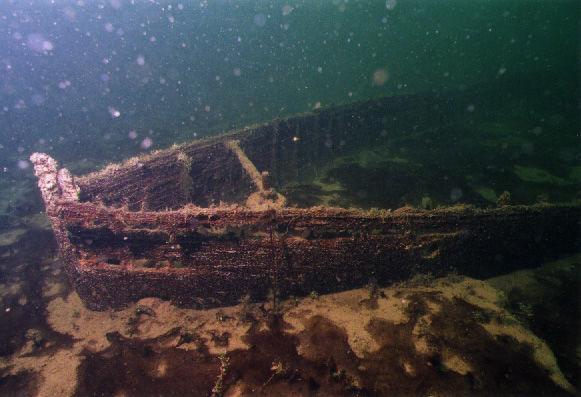
The bow of an old excursion boat, perhaps a century old, that provided tours sits on the bottom of Lake Mendota.
TAMARA THOMSEN
Diver explores wreck
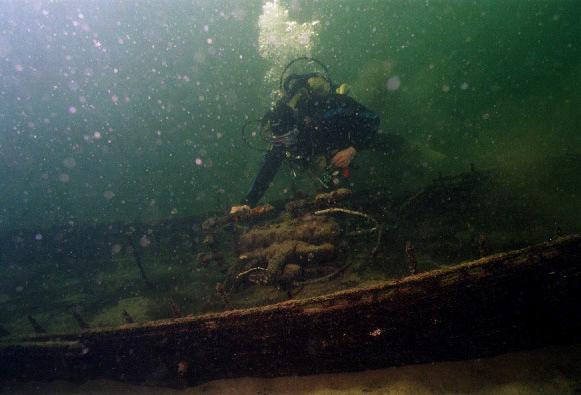
A diver inspects a sunken excursion boat at the bottom of Lake Mendota.
TAMARA THOMSEN
Smilin’ Bill wreck
The Smilin’ Bill rests about 20 feet below the surface at the bottom of University Bay in Lake Mendota.
TAMARA THOMSEN
Silt-covered boat
Silt and mud cover the Smilin’ Bill at the bottom of Lake Mendota.
TAMARA THOMSEN
Mysterious wagon
A wagon sits at the bottom of Lake Mendota. Divers haven’t figured out the details about what happened to lead it to the bottom.
TAMARA THOMSEN
Monona Terrace supports
Posts help support the concrete poured for Monona Terrace.
TAMARA THOMSEN
Ice diving
Ice diving is popular among scuba enthusiasts in the Madison area. Here divers wait for their turn underwater during the winter. Typically divers wear dry suits or pour warm water down the front of their wet suits to be able to handle the chilly water temperatures.
TAMARA THOMSEN
Abandoned dredge
Part of a dredge is left over in Lake Monona.
TAMARA THOMSEN
Weed sprayer
An old weed sprayer, with a paddlewheel, sits at the bottom of Lake Monona in about 35 feet of water.
TAMARA THOMSEN
Boat lift
A sunken boat lift was found at the bottom of Lake Waubesa. The lift was used to raise and lower boats into the lake.
TAMARA THOMSEN
Overturned boat
An overturned boat with motor sunk into Lake Waubesa.
TAMARA THOMSEN
Overturned boat
The overturned boat in Lake Waubesa.
TAMARA THOMSEN
Sunken canoe
Not many canoes sink to the bottom of a river or lake. This one did in Lake Waubesa.
TAMARA THOMSEN
Fish crib
A fish crib in Lake Waubesa helps shelter fish, allowing them to hide and grow to maturity. The cribs, often made by anglers, also make for excellent fishing habitats.
TAMARA THOMSEN
Sunken car
This is one of several cars at the bottom of Fox Bluff in Lake Mendota.
TAMARA THOMSEN
Sunken antique car
This car from the early 20th century could have entered Lake Mendota near Fox Bluff around 100 years ago.
TAMARA THOMSEN
Weed cutter
The remains of a weed cutter sit at the bottom of Lake Mendota.
TAMARA THOMSEN
Sunken car
This is the rear of a car at the bottom of Lake Kegonsa.
TAMARA THOMSEN
Sunken car
A car sits at the bottom of Lake Kegonsa.
TAMARA THOMSEN
Sunken boat
A boat, with its steering wheel still in place, sits in Lake Kegonsa.
TAMARA THOMSEN
Boat mystery
A boat, with motor intact, was found at the bottom of Lake Kegonsa. It’s unclear if the boat was abandoned or sank as the result of an accident.
TAMARA THOMSEN
Sunken scow
The “Irish,” a sailing scow, was found under about 45 feet of water in Lake Monona where it meets the Yahara River.
TAMARA THOMSEN
Bottle collection
These vintage soda bottles are from Tamara Thomsen’s collection, gathered from Madison’s lakes.
TAMARA THOMSEN
Vintage bottle collection
Tamara Thomsen collected these vintage beer bottles during cleanup dives in Madison lakes.
The Marine Minerals Administration today announced the availability of the Proposed Notice of Sale for the fourth offshore oil and gas lease sale in the Gulf of America under the Working Families Tax Cut Act. The proposed lease sale, known as Big Beautiful Gulf 4, or BBG4, advances President Trump’s promise to Unleash American Energy…. Read More
The Marine Minerals Administration today announced the availability of a Proposed Notice of Sale for Big Beautiful Cook Inlet 2, or BBC2, the second offshore oil and gas lease sale in Alaska’s Cook Inlet required by the Working Families Tax Cut Act of 2025. The proposed sale would make approximately 1.05 million acres available for… Read More
By Jay Edwards U.S. Rep. Tom Kean Jr. Tuesday presented $560,000 in federal funding to Mount Arlington on Monday for a dredging project aimed at improving stormwater management at Memorial Pond and protecting the water quality of Lake Hopatcong. Memorial Pond manages stormwater and serves as a basin before water enters Lake Hopatcong. Over time,… Read More
By Jens Karsten Scotland’s Lerwick Port Authority (LPA) expects to complete its harbour dredging campaign in Shetland within this month as contractor Boskalis Westminster works through the final areas. The campaign covers five areas of Lerwick Harbour: North Ness Channel, the central basin, Gremista, Mair’s Pier and Dales Voe. The LPA said the improvements will… Read More
By Sam Lemonick Starting this winter, crews could begin a multiple-year process to try to reverse harmful effects of agriculture on Long Marsh. If the Harpswell Heritage Land Trust and its partners are successful, the salt marsh will provide more habitat for animals and be more resilient to rising sea levels. Salt marshes are tidal wetlands where… Read More