
Posted on August 20, 2020
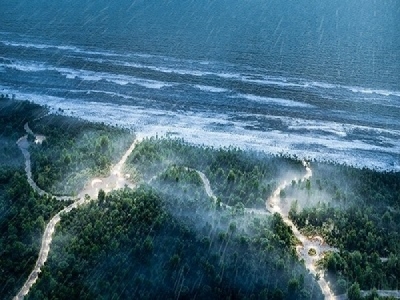
At the doorstep to one of China’s largest cities, the new Xichong coastal reserve project enhances the natural seaside getaway experience, protects local ecosystems and communities, whilst supporting a new ecological tourism industry for a burgeoning chinese middle class.
Since 2018, when typhoon manghut devastated southern China, causing severe damage, a swathe of reconstruction projects have been underway. Meanwhile, despite being in a typhoon zone, popular beach destinations have approved new high-density mega-developments along their beachfronts. However, the Xichong coastal reserve by Mandaworks, Gossamer & Arcadis is markedly different. The masterplan prioritizes typhoon resistance, ecological restoration, and preservation of local villages. In this way, the design reflects the broader shift within China towards sensitive development, environmental protection, and cultural preservation.
The project leads with a progressive landscape approach integrating transport, urban design, architecture, engineering, and tourism strategies, prioritizing environmentally-driven solutions to a wide range of challenges. The robust framework allows for a rational development that enhances the area’s rich biodiversity, environment, and extreme weather resiliency. The reserve design restores natural water flows by repairing eroded river corridors, wetlands, and coastal mangrove habitats. This then provides a suite of tourist experiences from boardwalks, kayaking routes, bird hides, and floating markets, while new flood-proof residences respond to the natural river system.
Upgrades have been applied to the existing farmland, allowing for organic agriculture, markets, and teahouses, protected by surrounding mountains, to create opportunities for new lookouts, bicycle trails, hiking shelters and cliff walks. Defending with landscape the project’s coastal defense strategy introduces flood and typhoon mitigation through reinstating dune systems previously destroyed by typhoons and over-development. Cafes, restaurants, and changing rooms are built within the re-constructed dune-scapes, connecting with sheltered beach walks, camping areas, and natural playgrounds. A new dike, hybridizing modern engineering and natural coastal landscapes, present unique typologies to interact with whilst protecting against flood and high seas.
Source: Coastal News Today


