

Posted on April 10, 2026
Louisiana’s $1.5 billion annual plan for coastal protection and restoration ran into a delay at the state Legislature on Wednesday after advocates raised concerns over a major change in strategy by Gov. Jeff Landry’s administration.
The advocacy group Women of the Storm, formed in the wake of Hurricane Katrina, has posed a series of questions to the state’s coastal authority related to the cancellation of expansive river diversion projects. Senate President Cameron Henry has signaled his intent to have those questions answered before the plan can move forward, officials were told at a Senate committee hearing.
Louisiana’s $1.5 billion annual plan for coastal protection and restoration ran into a delay at the state Legislature on Wednesday after advocates raised concerns over a major change in strategy by Gov. Jeff Landry’s administration.
The advocacy group Women of the Storm, formed in the wake of Hurricane Katrina, has posed a series of questions to the state’s coastal authority related to the cancellation of expansive river diversion projects. Senate President Cameron Henry has signaled his intent to have those questions answered before the plan can move forward, officials were told at a Senate committee hearing.
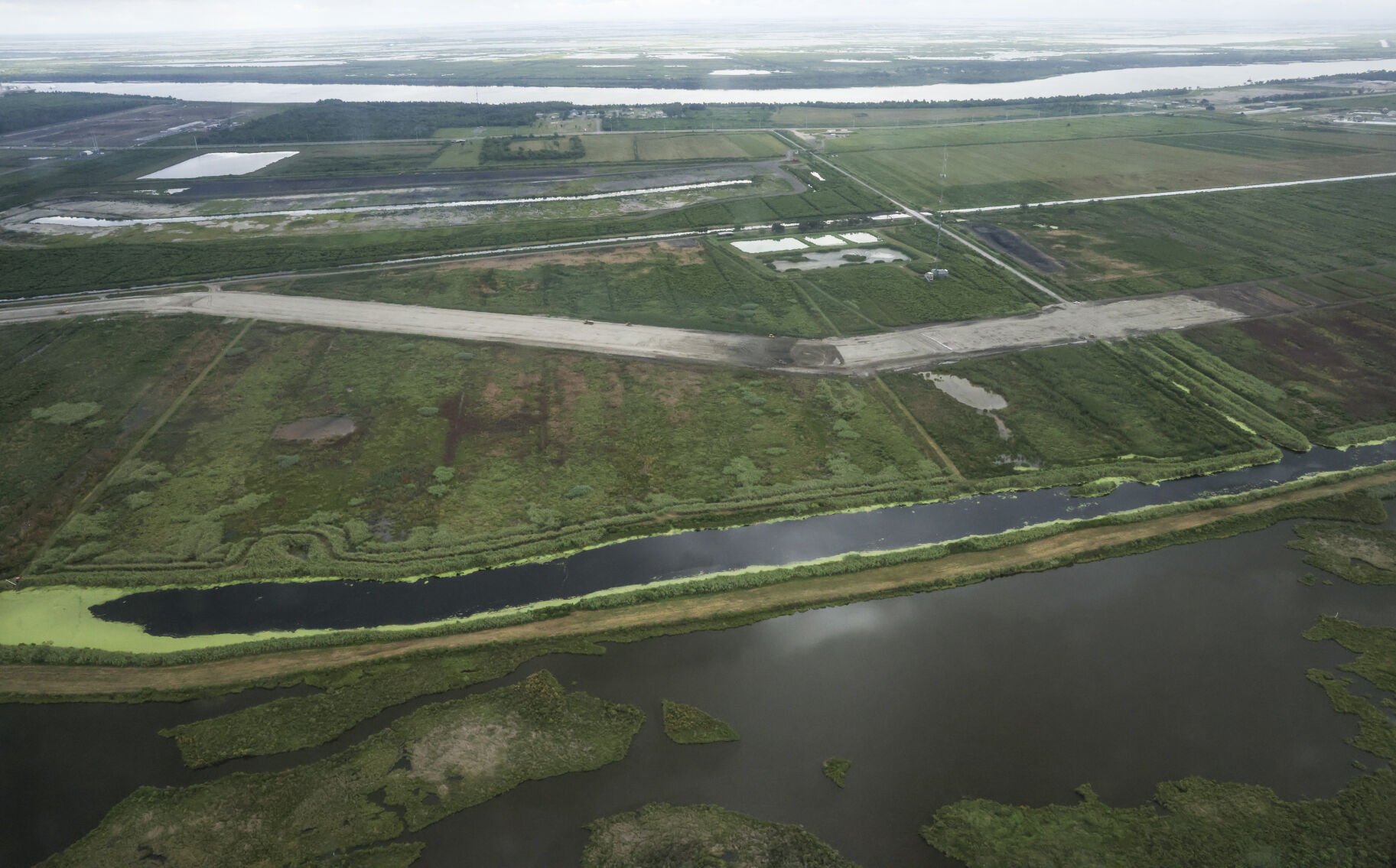
The delay is the latest turn in a long-running controversy surrounding the Landry administration’s move to cancel the Mid-Barataria and Mid-Breton Sediment Diversions. Mid-Barataria broke ground in 2023 while construction had not begun on Mid-Breton.
Those unprecedented projects had long been seen as linchpins in the state’s coastal master plan, and around $700 million had already been disbursed for them. But Landry opposed the plans based on cost and the damage they would do to commercial fisheries in those areas.
The projects were being largely paid for with fines and settlement money related to the 2010 BP oil spill. The state’s coastal authority now plans to focus instead on building large-scale “land bridges” and restoring barrier islands.
Sen. Patrick Connick, R-Marrero, informed the coastal authority leadership of Henry’s wishes at the start of Wednesday’s hearing before the Senate’s Transportation, Highways and Public Works Committee.
“I think these are serious questions that need to be answered in a transparent way,” Connick, who chairs the committee, said later in the hearing.
Poll results
The hearing will continue next week after written questions can be answered and a meeting can be held to hash out concerns, Connick said. Approval from the committee is one of several steps the annual plan must take at the Legislature.
The annual plan for fiscal year 2027, which begins in July, includes a total of 143 active projects across the state’s coast, ranging from levee building to marsh construction and ecosystem restoration.

Coastal authority leadership said at the hearing that they were willing to meet and answer the questions. Women of the Storm founder Anne Milling said the group was “delighted that Sen. Connick was able to raise these issues.”
The advocacy group was instrumental in pressuring Congress to commit funding toward rebuilding after the twin devastations of Hurricanes Katrina and Rita in 2005. It has long pushed for construction of the diversions as a nature-based approach to Louisiana’s land loss crisis.
They note that land building through dredging alone eventually erodes like the rest of the coast, while river diversions would mimic the way south Louisiana was formed in the first place and nourish those other marsh rebuilding efforts. They point to a recent poll on behalf of the Restore the Mississippi River Delta coalition showing 76% of residents oppose the cancelation of the two diversions.
Women of the Storm’s questions relate to what specific projects will replace the diversions, money already spent on them, and how replacement projects will be evaluated and chosen, among others.
‘Cannot afford to build’
Landry and Coastal Protection and Restoration Authority leadership point to the ballooning cost of the diversions — Mid-Barataria had grown to around $3 billion alone — as well as the influx of freshwater and nutrients they would bring to commercial fishing areas. Oyster growers and shrimpers in those areas would have been forced to move or find a new line of work.
CPRA Chairman Gordon Dove said large-scale land bridges built with dredged sediment would produce results faster and for less money. Those ideas are still in the planning stages and details remain to be worked out.
“You cannot afford to build this diversion, besides killing the shrimp, the oysters,” Dove said.
He disputed that the $700 million disbursed would all be lost. He said that between insurance payments, interest on remaining funds and other methods the losses will amount to between $250 million and $275 million.
Sen. Gary Carter, D-New Orleans, pressed Dove on his contention that land bridges were a better strategy while expressing concerns over the losses.
“Even if it’s 275, that’s $275 million,” said Carter, who represents parts of Jefferson, Orleans and Plaquemines parishes. “That’s a lot.”

Gordon E. Dove, chairman of the state’s Coastal Protection and Restoration Authority


